 |
   |
 |
 |
You are currently viewing the Boeing WS-110A page |
  |
 |
Click this icon
to return to the Sky Monographs page |
 |
| |
 |
|
|
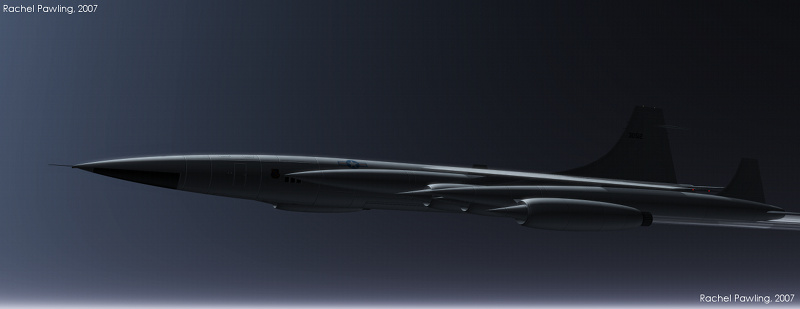
The
Model 725-87 cruises under a full moon. |
|
  |
Introduction |
| In
1955 the US Air Force issued System Requirement No.
22 for Weapon System (WS) 110A, a chemically powered
bomber to succeed the B-52 in SAC service from
1963. This aircraft was to be able to deliver
thermonuclear weapons to targets within the Soviet
Union from bases in the continental US. The
weapons were to be free-fall bombs or a 300+
nautical mile range cruise missile. The bomber
itself was to have an un-refuelled radius of more
than 4000 nautical miles, with a subsonic cruise and
high supersonic dash over the target. Both Boeing and North American Aviation studied various designs to meet this requirement. The winning North American proposal was ultimately developed into the XB-70 Valkyrie, which flew in prototype form in 1964. The Boeing configurations ranged from 16-engined developments of the B-52 to trapezoidal and delta winged machines. A more radical concept developed by Boeing but used by both competitors was the "floating panel". In this arrangement, the outer wings of the aircraft, with their own fuel pods, undercarriage and even engines, acted as sub-craft and were free to rotate in flight to eliminate loads on the central airframe. After the subsonic cruise section of the flight, these outer panels would be jettisoned and the bomber would accelerate to supersonic speeds for the attack. Although the use of large jettisonable pods had been demonstrated on the Convair B-58 Hustler, the idea was not carried forward and the final designs presented by North American and Boeing were monolithic bombers. |
|
|
Outline |
| This
page presents impressions and brief summaries of
some of the Boeing designs. The in-page images
are reduced resolution files. Clicking on the
images will open higher resolution images, typically
1024 by 768 pixels and 400kb. |
| |
 |
|
|
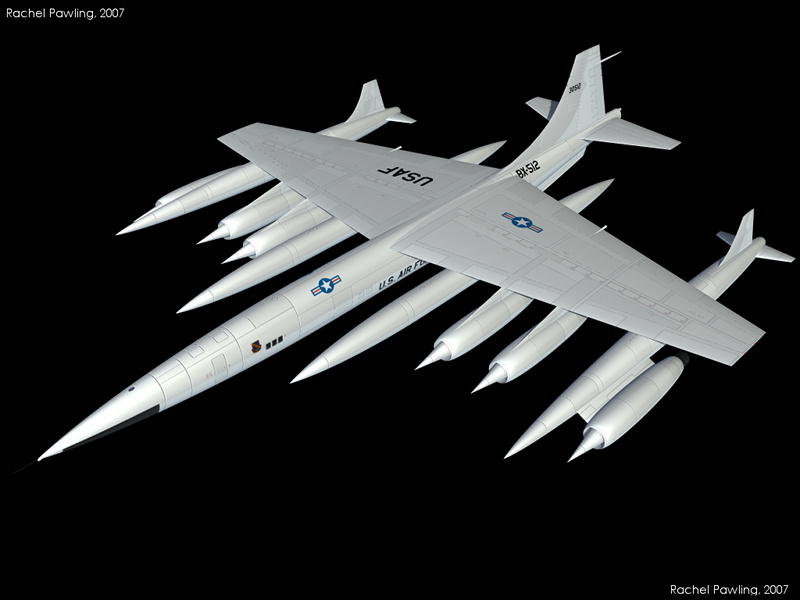
The
Model 725-87 composite bomber design, featuring
floating panels with fuel pods, engines and landing
gear. |
|
| |
 |
|
|
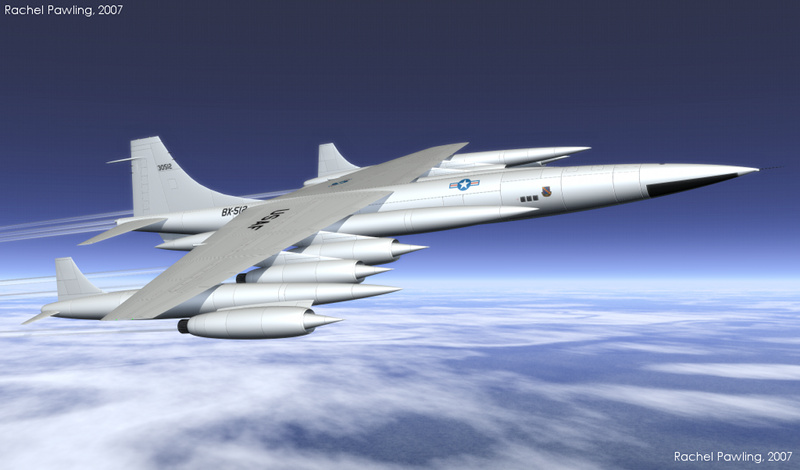
Overall
length of the Model 725-87 was 165 feet and overall
wingspan was 131 feet. |
|
© Rachel
Pawling, 2013
Correspondence to rachel@rp-one.net
bws110a - v.2
Correspondence to rachel@rp-one.net
bws110a - v.2